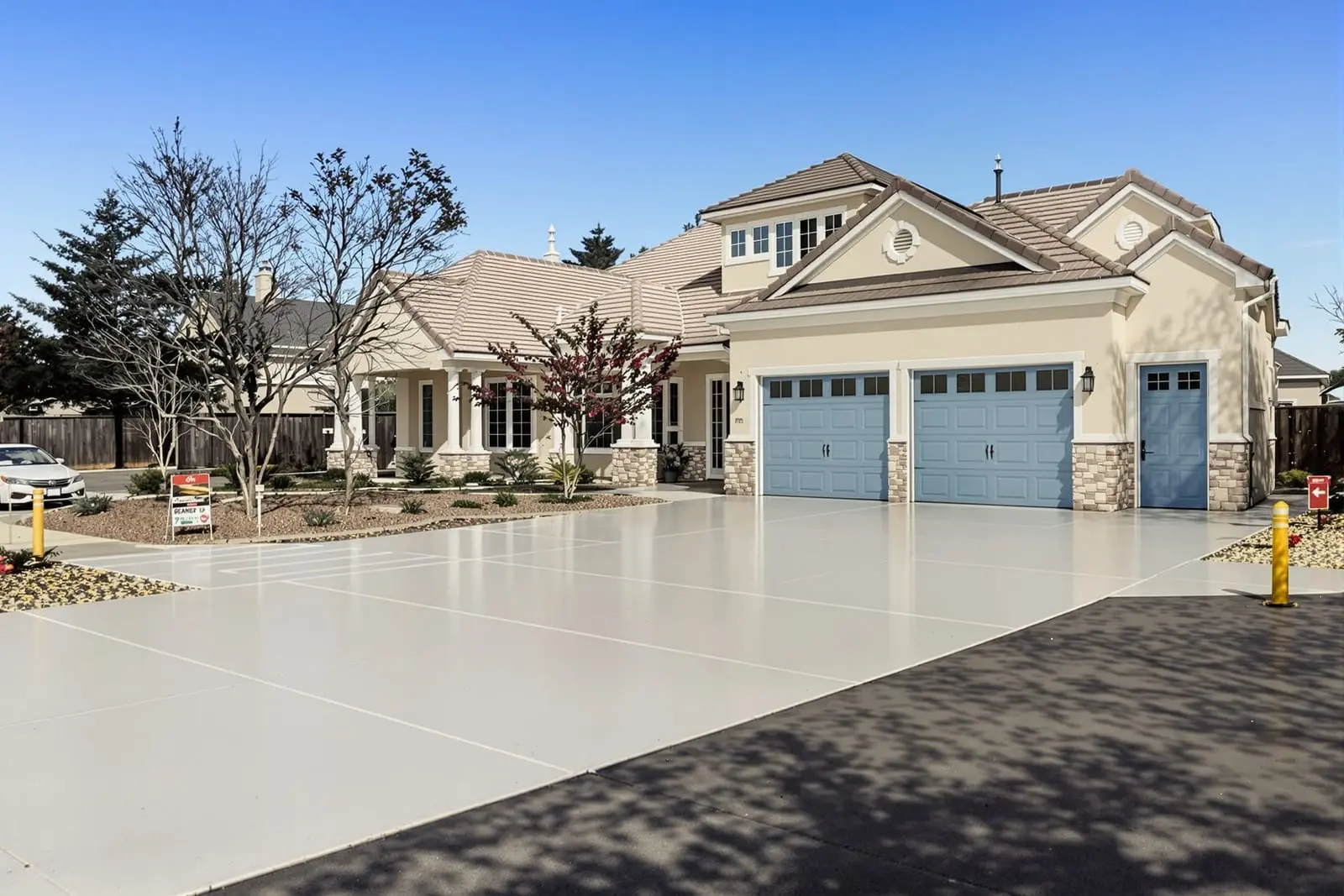
Primetime Concrete Pasadena delivers commercial concrete paving in Pasadena, TX for storefronts, offices, and industrial sites. We install reinforced flatwork for drive lanes, dumpster pads, and loading areas that handle heavy traffic. Our team coordinates around your business hours to limit downtime and disruption. Get dependable paving that reflects well on your property and customers.
Primetime Concrete Pasadena provides professional commercial concrete paving throughout Pasadena, TX and the surrounding area. Our licensed, insured crew delivers safe, clean, on-time work with a free estimate before anything begins. Call (346) 584-6090 or request your free quote.
Commercial Concrete Paving for Pasadena Businesses
Primetime Concrete Pasadena provides commercial concrete paving tailored to the way properties are actually used in Pasadena and the surrounding industrial corridor. We focus on long‑lasting pavement that stands up to 18‑wheelers, work trucks, and Houston‑area weather, not just something that looks smooth on day one.
Commercial concrete paving covers parking lots, drive lanes, loading docks, dumpster pads, equipment pads, and walkways. In Pasadena, that often means refitting older plants and strip centers that were originally built with thin asphalt, or concrete that was never designed for today’s heavier traffic. We evaluate how your property is used, including truck paths, turning areas, and where standing water currently collects, then design a pavement section that fits those real conditions.
Because Pasadena has a mix of refineries, warehouses, older retail centers, and newer medical and office buildings, there is no one standard pavement design that works everywhere. A loading dock that sees daily forklifts and container trucks needs thicker concrete and heavier reinforcing than a customer parking row out front. Primetime Concrete Pasadena separates these zones in the design so you are not overpaying for heavy‑duty concrete where you do not need it, or under‑building in high‑stress areas that will fail early.
How We Plan and Design Your Concrete Paving
Good commercial concrete paving starts before any concrete truck arrives. We walk the site with you to understand traffic patterns, existing drainage issues, and any operational limits, such as areas that must stay open or shift work schedules. For older properties in Pasadena, we also look at where existing pavement has cracked, sunk, or pumped mud, because that tells us where the subgrade is weak or waterlogged.
Next, we recommend pavement thickness and reinforcement based on load demands. For light duty customer parking, 4 to 5 inches of concrete with fiber reinforcement may be appropriate. For truck courts, dumpster pads, and fire lanes that carry heavier loads, we often specify 6 to 8 inches of concrete with rebar on a compacted base. When a business handles very heavy point loads, such as container yards along SH 225 or fabrication yards off Red Bluff, we may recommend thicker concrete or closer rebar spacing.
Drainage planning is critical in Pasadena because Gulf storms can drop several inches of rain in a short time. We set slopes so water moves to inlets or swales instead of ponding in front of doors or dock ramps. This usually means a minimum slope of around 1 to 2 percent on flat sites. In areas that already flood, we may suggest raising finished pavement elevation or adding additional inlets to keep water away from buildings and electrical equipment.
We also plan construction phasing. Many Pasadena commercial sites, from small retail centers on Spencer Highway to industrial complexes near the ship channel, cannot shut down completely. Primetime Concrete Pasadena sets up work zones so part of your lot or drive stays usable, then schedules pours and curing time around shift changes, delivery windows, and customer hours.
Our Commercial Concrete Paving Process on Site
On a typical commercial concrete paving project, work begins with saw‑cutting and removing existing asphalt or failed concrete. We haul off debris to a proper facility, which is especially important when we work near industrial sites that may have special disposal requirements. Once the old pavement is out, we proof‑roll the exposed subgrade with heavy equipment to find soft spots. Any pumping or deflection is cut out and replaced with compacted base material so your new pavement does not inherit old problems.
Base preparation is the backbone of long‑lasting pavement. Depending on soil conditions in your part of Pasadena, we may use crushed concrete, limestone, or stabilized sand as a base layer, compacted in lifts to a specified density. In low‑lying or historically soft areas, such as sites near drainage ditches or bayous, we might recommend lime or cement stabilization of the subgrade. This reduces future settlement and rutting, especially under truck traffic.
After grading and compacting, we set forms and install reinforcement. For rebar, we tie it in a grid and support it on chairs so it stays centered in the slab, not lying on the bottom. Where fiber reinforcement is specified, it is added at the batch plant and mixed uniformly into the concrete. We also layout joint locations at this stage, since joint spacing and alignment directly affect how your slab will crack and move as it dries and experiences temperature swings.
Placement is coordinated so large sections can be poured in a single operation where possible. We use commercial‑grade mixes suitable for our climate and your load requirements, often around 4,000 to 5,000 psi, with air entrainment when freeze‑thaw resistance is needed. Finishing can be a standard broom finish for parking and drive areas, or a tighter steel‑trowel finish for interior slabs and some loading zones. Before we leave for the day, we check that surface drainage performs as designed using water tests, so we can correct issues while the concrete is still workable.
Finishing, Curing, and Long‑Term Performance
What happens in the first few days after the pour has a big impact on how long your commercial concrete paving will last. Primetime Concrete Pasadena uses curing methods suited to the season and your schedule. In hot Pasadena summers, we often apply a curing compound immediately after finishing to slow moisture loss and prevent surface cracking. On larger truck courts, we may also recommend wet curing methods in certain areas to control curling and shrinkage.
We cut control joints at the proper depth and spacing once the concrete has gained enough strength but before random cracking starts. For typical 6‑inch paving, that usually means joints spaced about 12 to 15 feet apart in each direction, adjusted to fit your layout and traffic flow. Around columns, drains, and other penetrations, we add extra joints or detailing to minimize stress concentrations that would otherwise cause random cracks.
For heavy service areas like refinery truck entrances, emergency access roads, and dumpster pads, we often install doweled construction joints so adjacent panels stay level over time. This helps prevent the slab stepping that leads to trip hazards and vehicle impact. In high‑visibility retail entries in places like Fairmont Parkway or Beltway 8 corridors, we can also offer decorative touches such as colored concrete bands or scored patterns, as long as they do not interfere with drainage or slip resistance.
Before turning the pavement over to you, we provide clear guidance on when different areas can be opened to foot traffic, light vehicles, and heavy trucks. Many slabs can handle light vehicle traffic within a few days, but heavy truck traffic usually requires a longer curing period based on the mix and thickness. We also review maintenance basics so you know how to clean, seal, and inspect the pavement to get the longest life out of your investment.
Cost, Common Problems, and What Pasadena Owners Should Ask
The cost of commercial concrete paving in Pasadena is driven by more than just square footage. Thickness, reinforcing type, base preparation, access for equipment, and phasing around your operations all matter. A simple customer parking lot with easy access and minimal demolition will be far less per square foot than a heavily reinforced truck court with deep subgrade repair behind an active plant. At Primetime Concrete Pasadena, we break out these components on our proposals so you can see what is driving the number and where options exist.
Common problems on local commercial sites include chronic standing water, cracked and rocking panels near dock doors, and rutting where heavy trucks turn. Many of these issues trace back to missed steps during the original build, such as no real base, inadequate thickness, or poor joint layout. When we estimate your project, we look for these red flags and explain how our proposed section addresses each one, whether that is thicker concrete in key lanes, better drainage slopes, or subgrade stabilization in known soft spots.
Before you hire any contractor for commercial concrete paving, ask specific questions. For example, how do they determine thickness in different zones, and will that be shown on the plan or proposal. What compressive strength and mix design will they use, and how is reinforcement installed and inspected. How will they handle rain days, which are common along the Gulf Coast, and protect fresh concrete if a storm pops up.
Operational planning is also important. Ask how the contractor intends to keep customer or truck access open, what the daily work hours will be, and how long each pour area will be out of service. A contractor that understands Pasadena’s mix of industrial shift work and retail peak times will schedule smarter and reduce disruption. Primetime Concrete Pasadena has worked on properties that operate 24 hours a day and small centers that cannot lose weekend parking, so we factor your real‑world needs into the plan, not just the drawings.
“
Professional commercial concrete paving, done right the first time, quality materials, honest pricing, and results that last.
Primetime Concrete Pasadena
Commercial Concrete Paving Across Our Service Area