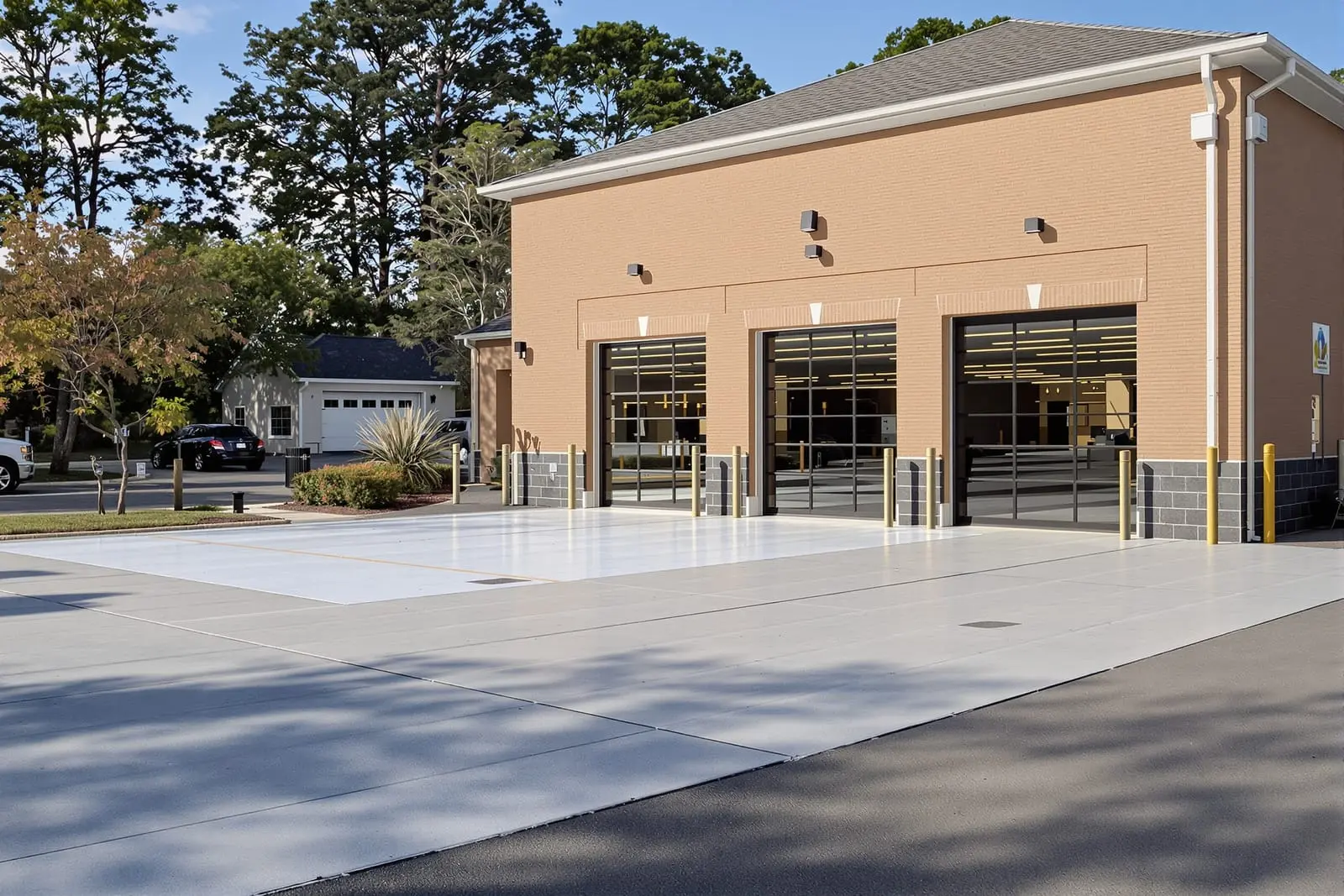
Primetime Concrete Pasadena constructs commercial concrete slab solutions in Pasadena, TX for loading docks, dumpster pads, and equipment areas. We design slabs with thicker sections, reinforcement, and proper elevations to match dock heights and truck positions. Our installations are built to handle repeated loading and harsh conditions. Support your logistics with strong, well planned concrete slabs.
Primetime Concrete Pasadena provides professional commercial concrete slab throughout Pasadena, TX and the surrounding area. Our licensed, insured crew delivers safe, clean, on-time work with a free estimate before anything begins. Call (346) 584-6090 or request your free quote.
Commercial concrete slabs built for Pasadena traffic and soil
Loading docks and commercial concrete slabs in Pasadena have to deal with two things at the same time: heavy trucks and Gulf Coast soil that stays soft and wet part of the year. At Primetime Concrete Pasadena, we start every project by looking at what is going on under the slab, not just what you see on top.
We begin with a site visit where we check the soil type, drainage paths, existing pavement and how trucks or forklifts actually move through your property. A slab for a grocery loading dock off Spencer Highway will be designed differently than a warehouse floor in an industrial park near SH 225. We look at traffic volume, truck weights, turning movements, and whether trailers will be parked for long periods.
Our commercial concrete slab designs are based on slab thickness, reinforcement, subgrade prep, and joint spacing that fit your use, not a one-size spec. For lighter commercial use, a 6 inch slab with rebar or fiber can be enough. For docks taking fully loaded 18 wheelers, we often move to 8 inches or more with a compacted crushed concrete base, doweled joints and heavier bar patterns. This is the level of detail that keeps edges from crumbling and prevents wheel ruts a few years down the road.
How we build loading docks that hold up to repeated impacts
Loading docks take abuse every day. Truck trailers hit the bumpers, forklifts slam pallets at the edge, and water collects around the doors if drainage is not planned right. Primetime Concrete Pasadena builds docks around how you work, starting with layout and height.
We check dock height against the mix of trailers you receive, then mark dock positions so the approach angle and turning radius match your driveway. We set forms to create a reinforced dock face where dock bumpers and levelers will mount. Anchor locations for steel plates, dock levelers, and bollards are planned before we pour, so you do not end up drilling randomly into fresh concrete later.
For the slab itself, we usually tie the dock floor and approach slab together with dowels. This keeps the two sections from separating at the joint, which is a common failure point when truck tires roll across the transition thousands of times per year. At the dock face, we often thicken the slab and tighten rebar spacing to handle point loads from trailer landing gear and dock leveler lips.
Surface texture is also important. We typically broom finish the drive lanes for traction when it rains, and may use a smoother trowel finish inside the dock area so pallet jacks roll cleanly. Around doors, we slope the concrete just enough to shed water away from the building while still keeping dock plates and seals working correctly.
What drives the cost of a commercial concrete slab in Pasadena
Property owners usually ask why two bidders can be far apart on price for what sounds like the same commercial concrete slab. The truth is, the details matter. Primetime Concrete Pasadena walks you through each cost driver so you can understand what you are paying for and where it is safe or risky to cut back.
Key factors include slab thickness, the type and depth of base material, reinforcement design, access for trucks and equipment, and the size and shape of the pour. A thickened edge where trucks sit, or a pit for a dock leveler, adds forming and rebar work. On older Pasadena commercial sites where existing asphalt or broken concrete has to be removed, demo and hauling can be a noticeable part of the budget.
Soil conditions matter as well. Some parts of Pasadena closer to the bayou have softer, more saturated soils. On these lots we may recommend undercutting weak soil and bringing in stabilized fill or crushed concrete. In other areas with harder ground we can often keep base prep simpler. Cutting corners under the slab saves money up front, but it is also the most common reason for slabs pumping, cracking, and settling in a few years.
Working hours and phasing affect cost too. If your loading dock or warehouse has to stay partially open, we can phase pours or work off-hours. That usually means more trips, more forming changes, and more joint work, which we explain directly in your quote so you can decide what is worth it for your operation.
The build process, step by step, from tear-out to final cure
When Primetime Concrete Pasadena installs a new loading dock or commercial slab, we follow a clear sequence so you know what will happen and when. First we handle layout and permits if needed, then we paint and stake out the slab edges, dock lines, ramp transitions, and any pits or thickened footings.
If there is old concrete or asphalt, we saw cut and remove it with skid steers or excavators, then haul debris to an approved facility. Next we grade to design elevations, install and compact base material in lifts, and check slopes to make sure water will go to drains, swales, or the street. For Pasadena's frequent downpours, we try to design at least a slight fall away from building walls and dock doors.
Forming comes next. We set and brace forms for the main slab, dock faces, and any steps or curbs. We install rebar grids, dowels, or wire mesh per the agreed design, tying into existing structures where needed. Before the pour, we do a walkthrough with you to confirm openings, bolt locations, and any embedded hardware.
On pour day, we bring concrete from reputable Houston-area batch plants, typically in the 3,500 to 5,000 psi range depending on the load requirements. We place and strike off the mix, use mechanical screeds on larger areas, and then bull float and finish to the texture you want. Control joints are saw cut at the right time to guide cracking. Finally, we apply curing methods that fit the season. In the Pasadena heat we often use curing compound and schedule pours early in the morning so the surface does not dry too fast.
We give you realistic timelines for light foot traffic, forklift use, and full truck loading. Many commercial slabs can handle foot traffic in 24 hours, equipment in several days, and full heavy truck loading after a longer cure, depending on mix and slab thickness.
Common problems we prevent and how to plan your project
Most commercial slab and loading dock headaches in Pasadena are avoidable if you plan them out. Primetime Concrete Pasadena tries to address these issues up front so you are not shutting down a bay six months after opening it.
Drainage is the first one. Docks often become low spots where water from the lot and roof all meet. We review downspout locations, existing inlets, and pavement grades to avoid water backing up at roll-up doors or ponding where forklifts have to work. Sometimes a small trench drain, added inlet, or minor regrading is enough to keep things dry.
Another common issue is edge and joint failure where asphalt meets concrete, or where a new slab meets an older one. We use dowels, proper joint spacing, and thicker concrete at those transitions to spread load. For operations that use hard wheels, like electric pallet jacks, we pay extra attention to joint layout so you do not feel constant bumps or see spalling along cuts.
Cracking is expected in concrete, but uncontrolled cracking is not. We design joint spacing based on slab thickness and shape, and we place rebar or fiber for load transfer and to keep cracks tight. We also talk with you about heavy rack lines, wheel paths, and dock equipment, then align joints away from those high stress zones when possible.
Before you hire any contractor, ask for a clear description of base prep, slab thickness by area, rebar size and spacing, concrete strength, and joint layout. A one-line quote that only says commercial concrete slab does not protect you. We provide a written scope so you understand exactly how your loading docks and slabs will be built and how they should perform in real day to day use.
“
Professional loading docks & commercial slabs, done right the first time, quality materials, honest pricing, and results that last.
Primetime Concrete Pasadena
Loading Docks & Commercial Slabs Across Our Service Area