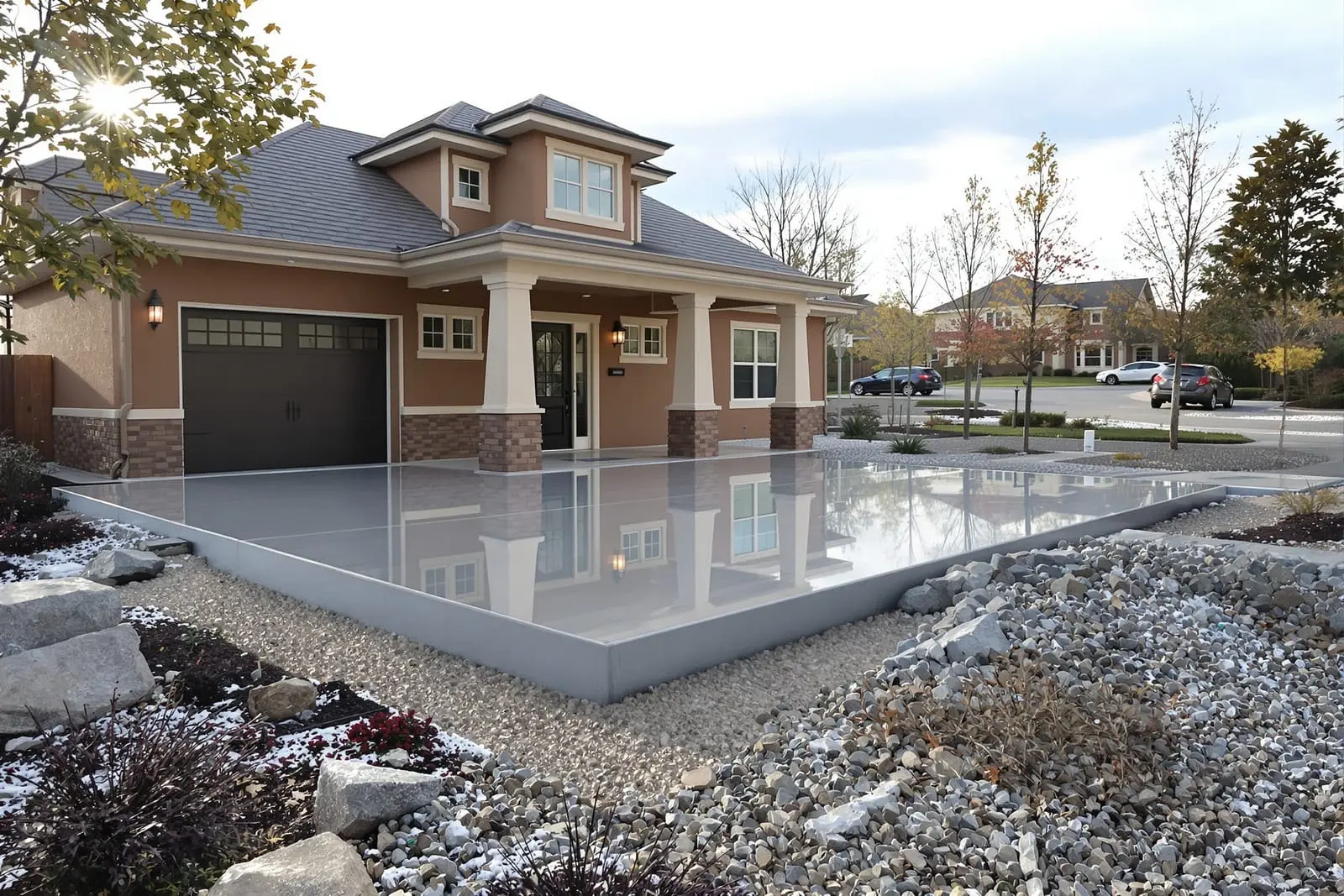
Primetime Concrete Pasadena handles commercial concrete flatwork for facilities across Pasadena, TX. We pour heavy duty slabs, sidewalks, dumpster pads, and more. Our team uses proper reinforcement, mix designs, and curing methods to reduce cracking and wear. Keep your operations running on reliable, level concrete surfaces.
Primetime Concrete Pasadena provides professional commercial concrete flatwork throughout Pasadena, TX and the surrounding area. Our licensed, insured crew delivers safe, clean, on-time work with a free estimate before anything begins. Call (346) 584-6090 or request your free quote.
Commercial concrete flatwork for busy Pasadena properties
When your business depends on a solid surface, commercial concrete flatwork is not the place to cut corners. Primetime Concrete Pasadena focuses on slabs and flatwork designed for the way Pasadena properties are actually used: forklifts moving pallets in a warehouse off Spencer Highway, delivery trucks backing across loading aprons on Red Bluff, or steady foot traffic in a retail center near Fairmont.
Commercial concrete flatwork covers any large, flat concrete surface on your property. That includes building slabs, warehouse and shop floors, parking bays, dumpster pads, walkways, equipment pads, loading docks, and outdoor work yards. The thickness, reinforcement, and finish that make sense for a strip center walkway are very different from what you need under a 40,000 lb truck. We help you match the slab design to the real loads, not just a generic rule of thumb.
In Pasadena, your flatwork also has to live through Gulf Coast humidity, heavy rain, and summer heat that can push fresh concrete to set too fast. If pour timing, mix design, and curing are not adjusted for our local climate, the slab can crack, dust, or spall long before it should. Our crews schedule pours around heat and storms as much as possible, use mixes appropriate for local conditions, and apply curing methods that keep surface moisture from flashing off in the afternoon sun.
How Primetime Concrete Pasadena builds better slabs and flatwork
A successful commercial concrete slab starts with the subgrade. We strip organic soil, soft spots, and debris, then re-compact the base with the right moisture content so it behaves as a uniform support. On clay-heavy Pasadena sites, especially around South Houston Road and older industrial areas, we often recommend a stabilized base or additional base rock to reduce long term movement.
Next, we install forms and layout. This is where we lock in finished elevations so water drains away from buildings, roll-up doors, and walkways. Standing water is a big problem in our heavy rains, so we plan slopes so that water moves toward drains or edges instead of drying under pallets or pooling at thresholds.
Reinforcement comes after layout. Depending on your use and engineering, we may install rebar on proper chairs, welded wire mesh, or a combination of both. For forklift aisles or machine pads, we often tighten rebar spacing and thicken the slab under wheel paths or equipment legs instead of wasting concrete where it provides no benefit. We can also integrate dowels at door openings and construction joints to help slabs move without creating trip hazards.
Then we pour and place concrete using a mix that fits the project. For large interior floors, we usually use a mix with lower water content, plasticizers for workability, and sometimes fibers for extra crack resistance. For outdoor commercial flatwork that sees deicing salts from occasional winter treatments and a lot of sun, we like air-entrained mixes and 4,000 psi strength or greater. Our crews use screeds, bull floats, and power trowels to bring surfaces to the finish quality your use demands.
Finish options, joints, and durability choices for commercial surfaces
Not every commercial floor should look or feel the same. Primetime Concrete Pasadena walks you through finish options that match how the area is used and cleaned. For warehouse and shop floors, a hard trowel finish creates a smooth surface that is easy to sweep and roll carts on, but we control the finishing process to avoid burnished surfaces that can become slick when dusty. In outdoor pedestrian areas, like restaurant patios or office walkways, we often recommend broom finishes that give enough texture for traction during rain.
We can integrate hardeners, densifiers, and sealers to make your commercial concrete flatwork last longer and stay cleaner. Dry shake hardeners are useful in high traffic aisles or around loading docks, where metal edges, pallet jacks, and dropped tools are common. For retail or showroom slabs that might later receive polish, we pour with that in mind, manage flatness and levelness, and can return to grind and polish once the building is dried in.
Joints are one of the most overlooked parts of commercial slab design. We cut or form control joints to manage where cracks occur, then seal or fill them based on use. For forklift traffic, semi-rigid joint fillers help prevent wheels from breaking down joint edges. Around food service areas, we select sealants resistant to fats and oils so the joints do not deteriorate prematurely. On exterior flatwork, thoughtful joint spacing and layout keep panels small enough to handle thermal movement from our temperature swings between hot afternoons and cooler nights.
If you need color, striping, or traction treatments, we can coordinate those as well. That might mean adding integral color to define outdoor seating zones, sawcut patterns for branding around an entry, or abrasive additives in a sealer for ramps and sloped walkways.
Cost factors and common issues specific to Pasadena projects
Owners often ask why prices for commercial concrete flatwork vary so much. The biggest cost drivers are slab thickness, reinforcement type, access for equipment, and how much prep work the site needs. A 4 inch broom finish sidewalk around a medical office is one thing. A 7 or 8 inch thick, steel reinforced truck court behind a plant off Beltway 8 is something else entirely. Heavier use, more joints, tighter flatness tolerances, and specialty finishes all add labor, materials, or both.
Access and staging matter a lot in Pasadena. On tight infill sites or operating facilities, we may need smaller trucks, additional pump time, night or weekend work, and more hand work around existing utilities and structures. That can raise labor costs compared to a wide open greenfield site. Soil conditions can also add cost. Soft, saturated clay or buried debris must be corrected before we pour, or the slab will settle and crack.
Local weather plays a direct role in scheduling and cost. In summer, we may pour earlier in the morning to avoid rapid surface drying that leads to plastic shrinkage cracks. During wet seasons, we sometimes have to delay work so heavy equipment does not rut the subgrade. Rushing a pour onto a pumped up, muddy base is a recipe for long term slab problems, so we maintain clear communication about schedule adjustments.
Typical issues we help Pasadena businesses avoid include poor drainage around the slab, inadequate joint layout, insufficient reinforcement in heavy traffic zones, and ignoring vapor concerns under interior slabs that will receive sensitive flooring. We talk through these risks up front so you know where it makes sense to invest and where a simpler detail will perform just fine.
What to know before you hire a commercial concrete flatwork contractor
Before you choose a contractor for commercial slabs and flatwork, ask about more than just square foot pricing. Primetime Concrete Pasadena encourages you to request details about subgrade preparation, base materials, reinforcement schedule, control joint spacing, expected concrete strength, and curing methods. Any serious commercial flatwork contractor should be able to explain those clearly and in plain language.
Look for a team that is used to working around active operations. For industrial and commercial clients in Pasadena, we routinely phase pours so you can keep shipping and receiving open, coordinate truck routes so concrete delivery does not block your customers, and set up safety barricades and signage that keep staff and visitors away from fresh work.
It is also smart to ask about how cracks and surface blemishes will be handled. Concrete will develop some cracking over time, but good planning controls where and how. We design joints and reinforcement to manage that movement, then stand behind our work if an issue shows up outside normal expectations. We document mix tickets, reinforcement installation, and curing steps so there is a clear record of how your slab was built.
If you have existing flatwork that failed early, bring that history to the conversation. Issues like edge raveling at bay doors, slab curling at joints, or dusting floors can often be tied to specific design or placement problems that we can avoid the second time around. Our goal is to give Pasadena property owners concrete flatwork that matches the demands of the site so you can forget about the slab and focus on running your business.
“
Professional commercial slabs & flatwork, done right the first time, quality materials, honest pricing, and results that last.
Primetime Concrete Pasadena
Commercial Slabs & Flatwork Across Our Service Area